
New Year’s Eve Sangria Simple Pitcher Recipe at Home
What makes a celebration drink memorable enough that guests request the recipe before midnight even strikes? New Year’s Eve sangria transforms ordinary gatherings into extraordinary celebrations with its vibrant colors, refreshing flavors, and festive presentation that captures the excitement of welcoming a new beginning. This cold drink recipe combines the sophistication of wine with the bright burst of fresh fruit and spirits, creating a pitcher-style beverage that’s both elegant and effortless to prepare. Whether you’re hosting an intimate dinner party or a large countdown celebration, New Year’s Eve sangria serves as the perfect centerpiece drink that allows you to spend more time with guests and less time playing bartender.
Table of Contents
Ingredients List
For this New Year’s Eve sangria, you’ll need:
- 2 bottles (750ml each) dry red wine, such as Merlot or Cabernet Sauvignon
- 1 cup brandy or cognac
- 1/2 cup orange liqueur like Grand Marnier or Cointreau
- 1/4 cup fresh lemon juice, approximately 2 lemons
- 1/4 cup fresh lime juice, approximately 2 limes
- 1/3 cup granulated sugar or honey
- 2 oranges, thinly sliced into rounds
- 2 apples, cored and cut into wedges
- 1 cup fresh pomegranate arils for festive color and texture
- 1 cup fresh or frozen cranberries
- 2 cinnamon sticks for warm spice notes
- 3 star anise pods (optional, for aromatic complexity)
- 1 bottle (750ml) sparkling wine or champagne, chilled
- Fresh mint leaves for garnish
Timing
This New Year’s Eve sangria requires:
- Preparation Time: 15 minutes
- Chilling Time: 4-24 hours (recommended overnight)
- Final Assembly: 5 minutes
- Total Time: 4-24 hours
Step-by-Step Instructions
Step 1: Prepare Your Fruit and Base
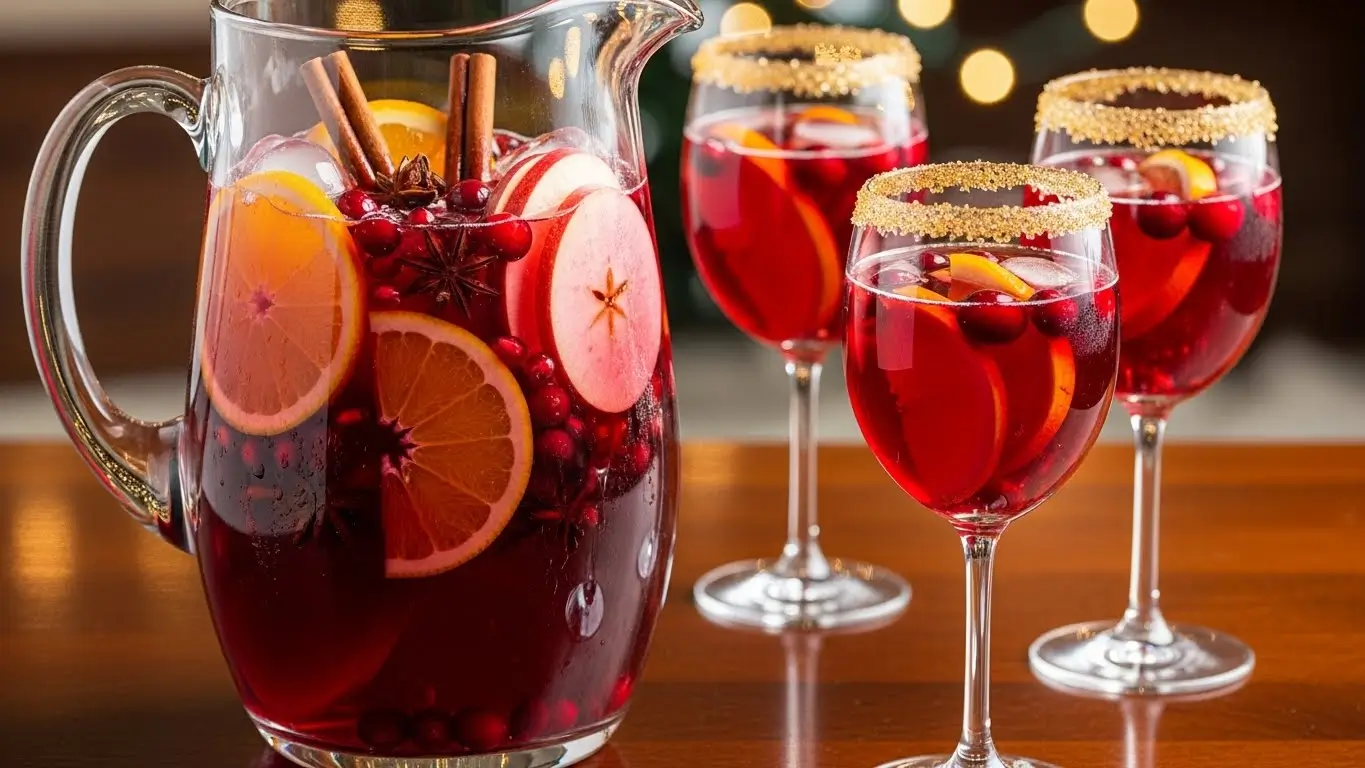
Begin by washing all your fruit thoroughly under cold water. Slice the oranges into thin rounds, leaving the peel intact for maximum flavor extraction and visual appeal. Core the apples and cut them into uniform wedges to ensure even maceration. In a large glass pitcher or drink dispenser, combine the sliced oranges, apple wedges, pomegranate arils, and cranberries. The variety of colors creates an eye-catching display that screams celebration. Add the cinnamon sticks and star anise pods, which will infuse warm, aromatic notes throughout the chilling process.
Step 2: Mix the Liquid Components
Pour both bottles of red wine over the prepared fruit in your pitcher. Add the brandy and orange liqueur, which provide depth and complexity to your New Year’s Eve sangria. In a small bowl, combine the fresh lemon juice, lime juice, and sugar, stirring until the sugar completely dissolves. This citrus-sugar mixture brightens the overall flavor profile and balances the wine’s tannins. Pour this mixture into the pitcher and stir gently with a long spoon to combine all ingredients without bruising the fruit.
Step 3: Allow Proper Maceration Time
Cover your pitcher tightly with plastic wrap or a fitted lid and refrigerate for at least 4 hours, though overnight chilling yields optimal results. During this time, the fruit releases its natural juices and absorbs the wine, creating a harmonious blend of flavors. The longer maceration period allows the cinnamon and star anise to infuse their warming spices throughout the mixture. Stir the sangria once or twice during chilling to redistribute the fruit and ensure even flavor development. This patience transforms good sangria into exceptional sangria.
Step 4: Add the Sparkling Element
Just before serving your New Year’s Eve sangria, remove the pitcher from the refrigerator and taste for sweetness, adjusting with additional sugar if needed. Pour in the entire bottle of chilled sparkling wine or champagne, stirring gently to incorporate without losing too much carbonation. The bubbles add a festive effervescence that elevates the sangria from everyday to celebration-worthy. The sparkling wine should be added at the last moment to preserve its lively fizz and ensure each glass poured maintains that delightful sparkle.
Step 5: Serve with Style
Fill wine glasses or tumblers with ice if desired, though many prefer sangria chilled without ice to avoid dilution. Using a ladle or large spoon, serve the New Year’s Eve sangria, making sure each glass receives a generous portion of the macerated fruit, which has absorbed the delicious wine mixture. Garnish each glass with a sprig of fresh mint and perhaps an extra pomegranate aril or orange slice on the rim for visual impact. The presentation should feel as festive as the occasion, with vibrant colors and aromatic garnishes that invite guests to raise their glasses for the countdown.
Nutritional Information
For a serving of this New Year’s Eve sangria (8 oz):
- Calories: 195
- Total Fat: 0.2g
- Saturated Fat: 0g
- Cholesterol: 0mg
- Sodium: 8mg
- Total Carbohydrates: 22g
- Dietary Fiber: 2g
- Sugars: 16g
- Protein: 0.5g
- Alcohol Content: 12g (approximately 15% ABV)
- Vitamin C: 18mg
Healthier Alternatives for the Recipe
Transform your New Year’s Eve sangria into a healthier version with these modifications:
- Natural Sweeteners: Replace granulated sugar with stevia, monk fruit sweetener, or agave nectar to reduce refined sugar content while maintaining sweetness
- Lower Alcohol Version: Use only one bottle of wine and increase the proportion of fresh fruit juice and sparkling water for a lighter, less potent sangria
- Antioxidant Boost: Add fresh berries like blueberries and blackberries, which are rich in antioxidants and add natural sweetness without extra sugar
- Non-Alcoholic Mocktail: Substitute wine with grape juice or pomegranate juice, brandy with apple cider, and use non-alcoholic sparkling wine for a family-friendly version
- Reduced Sugar Strategy: Cut the added sugar in half and rely more on the natural sweetness from ripe fruit and orange liqueur
- Herbal Infusion: Add fresh rosemary or basil sprigs for additional antioxidants and aromatic complexity without calories
Serving Suggestions
Elevate your New Year’s Eve sangria experience with these ideas:
- Serve in elegant wine glasses rimmed with gold or silver sugar for a glamorous midnight toast presentation
- Create a sangria bar where guests can customize their glasses with additional fruit, herbs, or flavored syrups
- Pair with appetizers like cheese boards, bruschetta, or charcuterie platters that complement the wine’s fruit-forward profile
- Freeze some sangria in ice cube trays beforehand to keep drinks cold without diluting the flavor
- Serve alongside sparkling water with citrus for guests who want to alternate between alcoholic and non-alcoholic beverages
- Present this New Year’s Eve sangria recipe in a large glass beverage dispenser with a ladle for self-service at casual gatherings
- Garnish the pitcher with festive elements like edible gold flakes or frozen cranberries for photo-worthy presentation
Common Mistakes to Avoid
Master this New Year’s Eve sangria by avoiding these pitfalls:
- Using Expensive Wine: Save your premium bottles for sipping alone, as the added fruit and spirits mask subtle wine nuances, making mid-range options perfectly suitable
- Adding Sparkling Wine Too Early: Premature addition causes carbonation loss, resulting in flat sangria that lacks the celebratory fizz essential for New Year’s festivities
- Insufficient Chilling Time: Rushing the maceration process produces weak flavors, as fruit needs adequate time to release juices and absorb the wine mixture
- Over-Sweetening: Adding too much sugar overwhelms the natural fruit flavors and wine character, creating an unbalanced, cloying drink
- Using Underripe Fruit: Firm, unripe fruit won’t release enough juice or flavor during maceration, resulting in disappointing taste and texture
- Skipping the Citrus: Omitting lemon and lime juice leaves sangria flat and one-dimensional, as citrus provides essential brightness and acidity balance
- Ignoring Ice Strategy: Adding regular ice cubes directly to the pitcher dilutes the carefully balanced flavors as they melt throughout the evening
Storing Tips for the Recipe
Preserve the freshness of your New Year’s Eve sangria with these strategies:
- Optimal Storage Container: Keep sangria in a glass pitcher or airtight container in the refrigerator, avoiding metal containers that can impart unwanted flavors
- Pre-Sparkling Storage: Store the wine and fruit mixture for up to 48 hours before adding sparkling wine, allowing maximum flavor development without carbonation loss
- Leftover Management: Refrigerate leftover sangria in a sealed container for up to 3 days, though the fruit will become increasingly wine-soaked and soft
- Fruit Separation: Strain and store the wine-soaked fruit separately to use as a topping for ice cream, yogurt, or desserts
- Temperature Maintenance: Keep the pitcher refrigerated until serving time, removing it only briefly to pour drinks before returning to cold storage
- Batch Preparation: Make the base mixture up to 24 hours in advance, adding sparkling wine and final adjustments just before party time
- Freezing Option: Freeze leftover sangria without the sparkling wine in ice cube trays to use in future sangria batches or as flavorful ice for cocktails
Conclusion
New Year’s Eve sangria offers the perfect blend of sophistication and simplicity for your celebration. With vibrant fruits, quality wine, and festive sparkle, this pitcher cocktail ensures your guests raise their glasses with joy as the clock strikes midnight.
Ready to toast to new beginnings? Try this recipe and share your celebration stories in the review section below. Leave a comment on our blog with your favorite fruit combinations or creative twists that made your New Year’s Eve sangria unforgettable!
FAQs
Can I make New Year’s Eve sangria with white wine instead of red? Absolutely! White wine sangria works beautifully with lighter fruits like peaches, pears, and green grapes, creating a refreshing alternative that’s perfect for those who prefer lighter beverages.
How far in advance should I prepare my New Year’s Eve sangria? The ideal preparation window is 12-24 hours before serving, allowing fruit to macerate fully. Add sparkling wine only in the final 5 minutes before serving to maintain carbonation.
What’s the best wine to use for sangria? Choose medium-bodied, fruity red wines like Merlot, Garnacha, or Tempranillo that are affordable and complement the added fruits without overpowering them with heavy tannins.
Why does my New Year’s Eve sangria taste too strong? If the alcohol flavor dominates, add more fresh fruit juice, increase the sparkling wine ratio, or dilute slightly with chilled club soda to achieve better balance.
What should I do with leftover wine-soaked fruit? The macerated fruit is delicious served over vanilla ice cream, mixed into yogurt parfaits, blended into smoothies, or used as a topping for pound cake or cheesecake.
Your Feedback Matters
There are no reviews yet. Be the first one to write one.
One Comment
Comments are closed.