Spring Charcuterie Board: Easy Styling for Any Occasion
What transforms a simple arrangement of cheese and crackers into an Instagram-worthy centerpiece that becomes the focal point of every gathering? The magic lies in thoughtful composition, seasonal ingredients, and understanding color theory to create visual flow that draws guests in before they’ve taken their first bite. The spring charcuterie board elevates standard entertaining by incorporating fresh seasonal produce, edible flowers, and pastel-colored elements that celebrate renewal and new beginnings. This spring charcuterie board approach combines classic meats and cheeses with strawberries, asparagus, snap peas, and herbs in arrangements that feel both abundant and artful.
Table of Contents
Ingredients List
For this spring charcuterie board you’ll need:
- 8 ounces prosciutto, thinly sliced
- 8 ounces salami, sliced
- 6 ounces brie cheese
- 6 ounces aged cheddar, cubed
- 6 ounces goat cheese log
- 4 ounces blue cheese
- 1 cup fresh strawberries, whole and halved
- 1 bunch asparagus, blanched
- 1 cup snap peas
- 1 cup cherry tomatoes
- 1 cup mixed olives
- 1/2 cup honey
- 1/2 cup fig jam
- 1/2 cup whole grain mustard
- Assorted crackers and breadsticks
- Fresh herbs (thyme, rosemary, mint)
- Edible flowers (pansies, violas)
- Candied nuts
Timing
This spring charcuterie board requires:
- Preparation time: 20 minutes
- Assembly time: 15 minutes
- Total time: 35 minutes
Step-by-Step Instructions
Step 1: Choose and Prep Your Board
Select a large wooden cutting board, marble slab, or slate platter that provides ample space for arrangement—aim for at least 16×20 inches for a standard gathering. Wipe clean and let come to room temperature, as cold surfaces make cheese appear less appealing. Gather all your ingredients and arrange them in groups nearby for easy access during assembly. Room temperature cheese tastes significantly better than cold, so remove from the refrigerator 30-60 minutes before assembling your spring charcuterie board. This prep step ensures smooth, efficient assembly without last-minute scrambling.
Step 2: Place Anchor Items First
Begin by positioning your largest items—cheese wedges, small bowls for honey and jam, and ramekins for olives and mustard. These “anchors” create structure and prevent the board from looking cluttered or unbalanced. Place them at varying heights and distances across the board rather than grouping everything in one section. The brie wedge might go in one corner, the goat cheese log in another, with the blue cheese somewhere central. Small bowls of spreads and condiments should be distributed evenly to encourage guests to explore the entire board rather than crowding one area.
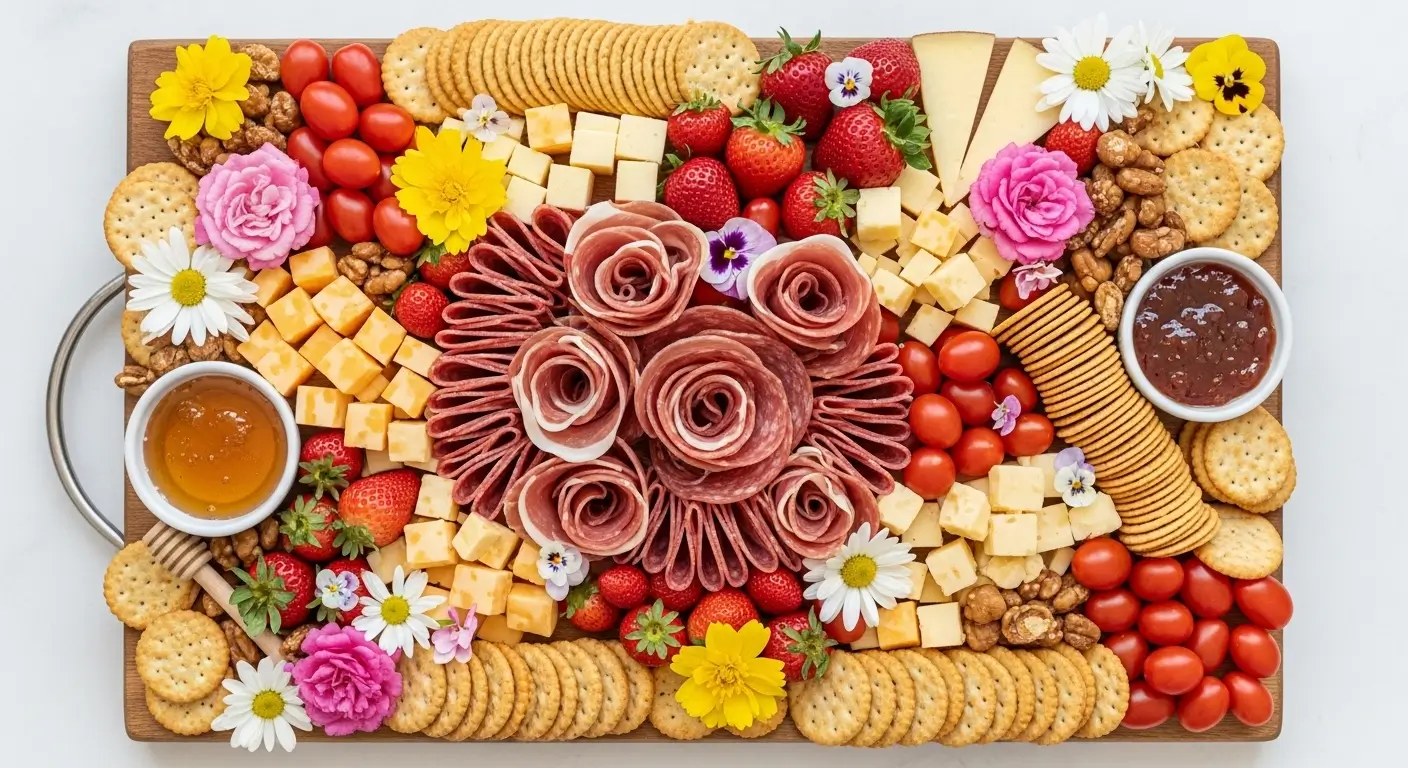
Step 3: Add Meats in Artistic Folds
Create visual interest with your cured meats by folding, rolling, or creating rosettes rather than laying slices flat. Fold prosciutto into loose ribbons, roll salami into cones, or fan slices in overlapping patterns. Group meats in sections between the cheese anchors, creating flow that guides the eye around your spring charcuterie board. Leave some breathing room—overcrowding makes selection difficult and looks messy rather than abundant. The goal is artful abundance that looks both generous and intentional.
Step 4: Fill with Spring Produce and Crackers
Now add your seasonal vegetables and fruits in the gaps between meats and cheeses. Stand blanched asparagus spears upright in a small glass or lay them in neat rows. Nestle strawberries in clusters, creating pops of red throughout. Add snap peas and cherry tomatoes in small piles. Tuck fresh herbs around items for color and fragrance. Fill remaining spaces with crackers standing on edge or fanned out, and add breadsticks at angles for height variation. Every empty space should have purpose—whether holding food or creating visual breathing room.
Step 5: Add Final Touches
Sprinkle candied nuts across the board wherever small gaps remain. Place edible flowers strategically for whimsical spring charm—their delicate petals add romance and reinforce the seasonal theme. Drizzle a small amount of honey over the goat cheese or into its serving bowl. Add small cheese knives and serving spoons where needed. Step back and assess the overall composition, adjusting anything that looks too sparse or too crowded. Your spring charcuterie board should look abundant but not chaotic, colorful but not overwhelming, and accessible from all sides.
Nutritional Information
For a serving of this spring charcuterie board (this recipe serves 8-10 people):
- Calories: 385
- Total Fat: 26g
- Saturated Fat: 11g
- Cholesterol: 65mg
- Sodium: 920mg
- Total Carbohydrates: 22g
- Dietary Fiber: 3g
- Sugars: 12g
- Protein: 18g
- Vitamin A: 850 IU
- Vitamin C: 32mg
- Calcium: 280mg
- Iron: 2mg
Healthier Alternatives for the Recipe
Transform your spring charcuterie board into a healthier version with these modifications:
- Lean Protein Options: Replace half the cured meats with grilled chicken breast slices or smoked salmon for lower sodium and saturated fat
- Plant-Based Section: Include hummus, baba ganoush, or white bean dip as protein-rich alternatives to cheese
- Whole Grain Crackers: Choose seeded crackers and whole grain options over refined flour varieties for increased fiber
- Vegetable Focus: Double the fresh vegetables and reduce cheese portions to increase nutrients while lowering calories
- Nut Cheese: Offer cashew-based or almond-based cheese alternatives for dairy-free guests
- Fresh Fruit Emphasis: Increase strawberries and add other spring fruits like apricots or cherries for natural sweetness
- Reduced Sodium: Select low-sodium versions of cured meats and cheeses to make the board more heart-healthy
Serving Suggestions
Elevate your spring charcuterie board experience with these ideas:
- Display on an outdoor table with fresh flower arrangements and pastel linens for garden party ambiance
- Pair with spring cocktails like Aperol spritz, rosé wine, or elderflower lemonade
- Create individual mini boards on small plates for seated dinners or socially-distanced gatherings
- Photograph from overhead before guests arrive to capture the artistic arrangement for social media
- Accompany the spring charcuterie board with additional sides like marinated vegetables, deviled eggs, or shrimp cocktail for variety
- Set out small plates, napkins, and cocktail picks nearby for easy self-service
- Label cheeses and specialty items with small cards for guests unfamiliar with artisanal varieties
Common Mistakes to Avoid
Master this spring charcuterie board by avoiding these pitfalls:
- Serving Cold Cheese: Room temperature cheese has significantly better flavor and texture—plan ahead for proper warming
- Overcrowding the Board: Packing too much creates visual chaos and makes items difficult to select
- Ignoring Color Balance: All beige items look boring—incorporate colorful spring produce for visual interest
- Wrong Cheese Portions: Whole cheese wheels are impressive but impractical—pre-cut some items for easy serving
- Forgetting Utensils: Not providing cheese knives and serving spoons forces guests to use fingers for everything
- No Variety in Texture: Including only soft or only hard items creates monotony—mix creamy, crumbly, and firm textures
- Last-Minute Assembly: Rushing assembly shows—take time to arrange thoughtfully for polished presentation
Storing Tips for the Recipe
Preserve the freshness of your spring charcuterie board with these strategies:
- Component Prep: Prepare individual elements up to 24 hours ahead, storing separately and assembling 1-2 hours before guests arrive
- Cheese Storage: Wrap cheeses individually in wax paper, then plastic wrap, storing in the warmest part of the refrigerator
- Meat Handling: Keep cured meats sealed until ready to use, or wrap tightly to prevent drying
- Vegetable Freshness: Store blanched asparagus and fresh vegetables in containers with damp paper towels
- Leftover Management: Discard perishables left at room temperature over 2 hours, refrigerate everything else properly wrapped
- Bread and Crackers: Store crackers in sealed containers to maintain crispness, keeping separately from moist items
- Reuse Strategy: Repurpose leftover cheese in omelets, sandwiches, or pasta dishes within 3-5 days
Conclusion
The spring charcuterie board transforms entertaining through thoughtful arrangement of seasonal ingredients. This versatile approach combines meats, cheeses, and fresh spring produce into an impressive presentation requiring minimal cooking while delivering maximum visual and flavor impact.
Ready to impress your guests? Create this spring charcuterie board and share your results in the review section below. Leave a comment on our blog with photos of your beautiful boards!
FAQs
How far in advance can I assemble a charcuterie board? Assemble 1-2 hours before guests arrive for optimal freshness. Prep components the day before but wait to arrange until closer to serving time.
What’s the ideal cheese-to-meat ratio? Aim for roughly equal amounts by weight, typically 2-3 ounces of each cheese and meat variety per person for a substantial appetizer spread.
How do I keep vegetables fresh on the board? Blanch asparagus briefly and shock in ice water, pat everything dry thoroughly, and don’t assemble more than 2 hours before serving.
Can I make this spring charcuterie board vegetarian? Absolutely! Omit meats and add more cheese varieties, additional vegetables, stuffed grape leaves, marinated artichokes, and plant-based dips.
What size board do I need? Plan for at least 2 square feet of board space for 8-10 people. Larger groups need multiple boards or a very large serving surface.
How do I arrange items aesthetically? Start with large anchor pieces, create odd-numbered groupings, vary heights and colors, and leave some empty space for visual breathing room.
Your Feedback Matters
There are no reviews yet. Be the first one to write one.